
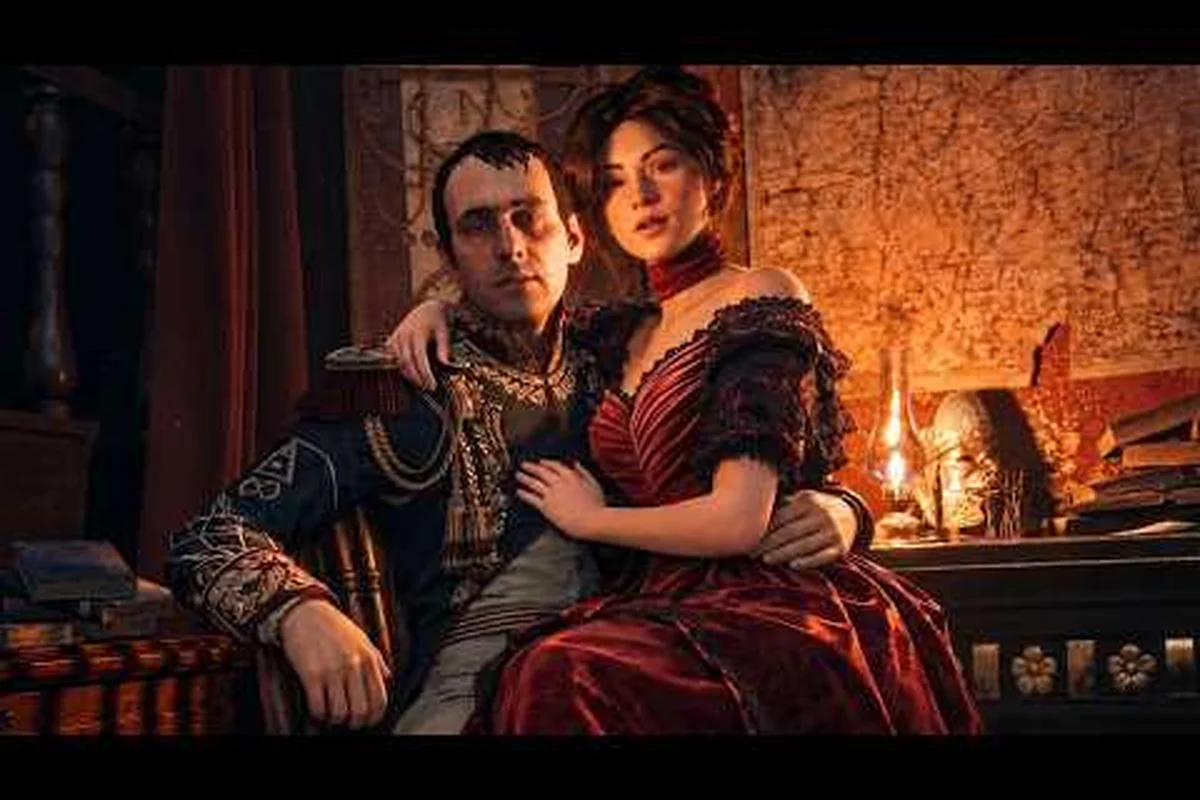
The Valor Mortis Napoleon Bonaparte storyline sits at the center of One More Level's alternate 19th-century Europe, where the Emperor did not fall at Waterloo but instead consolidated a supernatural reign. Understanding this version of history matters because every boss fight, resurrection mechanic, and corrupting power you encounter traces back to Napoleon's decision to embrace forces beyond mortal warfare. The game asks a single question: what happens when a military genius stops fighting for territory and starts fighting for control over death itself?
The Alternate 1815 Timeline That Changed Everything
Valor Mortis rewrites the end of the Napoleonic Wars with a single divergence point: Napoleon does not lose at Waterloo. Instead, the battle becomes a catastrophic supernatural event that transforms the Emperor from a defeated general into an immortal ruler. The Valor Mortis timeline explained through in-game documents and environmental storytelling shows that Napoleon discovered a ritual capable of binding souls to his will, which he deployed when conventional tactics failed. This act did not simply win the battle; it fractured the boundary between the living and the dead across Europe.
The consequences ripple through every region you explore. France becomes a necromantic empire where plague-corrupted soldiers serve alongside elite human commanders. The Eternal Guard — Napoleon's personal military force — gains unnatural resilience, with officers who can survive wounds that would kill ordinary men. According to the official Valor Mortis website, the game presents a world where horror, supernatural forces, and war coexist at every step, which means the historical setting serves as a foundation for a much darker fantasy.
| Timeline Event | Historical Reality | Valor Mortis Divergence |
|---|---|---|
| Battle of Waterloo (1815) | Napoleon defeated, exiled to Saint Helena | Napoleon unleashes soul-binding ritual, wins |
| Post-war Europe | Congress of Vienna restores monarchies | Necromantic empire spreads from France |
| Napoleon's fate | Dies in exile (1821) | Becomes immortal Emperor, rules for decades |
| Military structure | Grande Armée disbanded | Eternal Guard rises with supernatural officers |
| Civilian population | Gradual recovery | Plague corruption spreads, horror emerges |
This divergence creates the Valor Mortis alternate history that players must navigate. The game does not simply add magic to a historical setting; it asks what kind of ruler Napoleon becomes when victory requires sacrificing his humanity. Community reports from players who finished the roughly 25-hour campaign indicate that the timeline is revealed through fragmented documents, boss dialogue, and environmental details rather than a single exposition dump.
William's Role in the Corrupted Empire
The protagonist William begins as a former soldier in Napoleon's army, which immediately places him inside the corrupted system rather than outside it. This narrative choice matters because William's resurrection is not a heroic escape from death but a direct consequence of the Emperor's supernatural experiments. The Valor Mortis resurrection explained through early-game events shows that William dies during a battle and returns with abilities tied to the same corrupting power that sustains Napoleon's rule.
William's journey is not about overthrowing a tyrant from a position of moral clarity. Instead, he is tasked with exposing a plot that endangers every human being, all while carrying the same taint that empowers his enemies. This mirrors the official store description's framing of a wider threat hanging over the continent, but the details are best understood through in-game documents. The tension between using corrupting power to survive and resisting its influence drives the narrative forward. Players who explore the Valor Mortis story guide will find that William's personal history intersects with Napoleon's rise at multiple points, creating a protagonist who is both victim and potential successor to the Emperor's dark legacy.
Napoleon Bonaparte as the Final Boss
The Valor Mortis Napoleon Bonaparte boss fight represents the culmination of every mechanic the game teaches. According to the Steam store page, the final confrontation is a multi-phase fight that combines parry, dodge, and transmutation mechanics. This design choice forces players to demonstrate mastery over all three core systems rather than relying on a single optimized strategy.
The fight structure escalates through distinct phases that mirror Napoleon's historical and supernatural identities. Early phases emphasize his military command, with the Emperor directing Eternal Guard elites while remaining at range. Later phases strip away the military trappings and reveal the corrupting power beneath, transforming Napoleon into something that no longer resembles the historical figure. Community data suggests that players who reach the final fight unprepared often struggle with the transition between phases, as the timing windows shift dramatically.
| Boss Phase | Primary Mechanics | Key Threats | Recommended Focus |
|---|---|---|---|
| Military Command | Parry, positioning | Eternal Guard elites, ranged volleys | Clear adds, bait parry windows |
| Corrupted Ascension | Dodge, transmutation | AoE corruption zones, soul tethers | Maintain distance, transmute hazards |
| Final Form | All three systems | Rapid phase shifts, combined attacks | Adapt to mixed patterns, conserve stamina |
The fight's difficulty is not arbitrary. Napoleon's moveset reflects his historical reputation as a tactical genius, with feints and delayed attacks that punish players who react too early. The supernatural elements add a layer of unpredictability, as the Emperor can corrupt the arena itself, forcing players to manage space while dealing with direct threats. Players who want to understand the broader Valor Mortis corrupting power lore will recognize that the final fight is not just a mechanical challenge but a narrative resolution to William's relationship with the force that resurrected him.
The Eternal Guard and Napoleon's Inner Circle
Napoleon does not rule alone. The Eternal Guard serves as his elite military force, with commanders who appear as bosses throughout the game. These officers are not simple enemies but characters with their own relationships to the Emperor's corrupting power. Some embrace it willingly, seeing immortality as the ultimate military advantage. Others resist, creating fractures within Napoleon's inner circle that players can exploit.
The game's approach to historical figures extends beyond Napoleon. The Valor Mortis all characters roster includes both fictional creations and reimagined historical personalities, each with a defined role in the alternate timeline. This blend of history and invention gives the narrative weight, as players encounter figures they recognize from textbooks transformed by supernatural circumstances. The Eternal Guard lore guide provides deeper context on how Napoleon's military structure evolved after the timeline divergence.
Supernatural Lore and Corrupting Power
The Valor Mortis supernatural lore establishes that the force Napoleon wields is not neutral magic but a corrupting influence that degrades both body and mind. This distinction matters because it explains why William's resurrection is a double-edged sword. Every time the protagonist uses supernatural abilities, he risks becoming more like the Emperor he opposes. The game tracks this tension through visual changes, dialogue shifts, and mechanical trade-offs.
The corrupting power's origin remains partially mysterious, which serves the horror atmosphere. In-game documents suggest that Napoleon discovered the ritual through contact with entities that predate human civilization, but the game deliberately avoids full explanation. This restraint keeps the supernatural elements threatening rather than reducing them to a solvable system. Players who want to understand how these abilities function mechanically should consult the Valor Mortis magic guide, which breaks down transmutation types and upgrade paths.
| Power Source | Effect on User | Narrative Role |
|---|---|---|
| Soul-binding ritual | Immortality, command over dead | Napoleon's rise to power |
| Plague corruption | Physical mutation, rage | Creates abominations, spreads horror |
| Transmutation abilities | Temporary power, long-term cost | William's toolkit, moral tension |
| Eternal Guard blessing | Enhanced resilience, loyalty | Military hierarchy, boss design |
The corrupting power's influence on Napoleon explains his transformation from historical figure to final boss. He is not simply a tyrant with magic; he is a man who has traded away his humanity piece by piece over decades of supernatural rule. The final fight's escalation reflects this, as Napoleon abandons pretense and reveals the full extent of his corruption. Community reports indicate that the fight's visual design communicates this narrative arc, with the Emperor's appearance shifting to match each phase.
Why Napoleon's Story Resonates
The Valor Mortis Napoleon Bonaparte narrative works because it grounds supernatural horror in a recognizable historical figure. Napoleon is not an abstract evil but a person whose ambition and military genius are documented facts. The game asks what happens when those qualities encounter a power that removes all consequences. The answer is a ruler who cannot be defeated by conventional means, which forces the protagonist to confront the same corrupting force within himself.
This thematic depth separates Valor Mortis from simpler action games. The alternate history is not window dressing but the foundation for every mechanical and narrative decision. William's resurrection, the Eternal Guard's loyalty, the plague's spread, and the final confrontation all trace back to Napoleon's choice at Waterloo. Players who engage with the lore find that the boss fights carry more weight when they understand the history behind each enemy.
The game's release on October 13, 2026, brought this vision to players across PlayStation 5, Windows, and Xbox Series X/S. The roughly 25-hour campaign gives the narrative room to develop, with environmental storytelling and boss dialogue carrying much of the exposition. Players who rush through the combat may miss key details about Napoleon's transformation, which rewards those who explore thoroughly and read the scattered documents.
Frequently Asked Questions
Who is Napoleon Bonaparte in Valor Mortis?
Napoleon Bonaparte is the final boss and central antagonist of Valor Mortis. In this alternate timeline, he wins at Waterloo by unleashing a soul-binding ritual, becoming an immortal Emperor who rules a necromantic empire. His final fight combines parry, dodge, and transmutation mechanics across multiple phases.
How does the Valor Mortis timeline differ from real history?
The divergence point is the Battle of Waterloo in 1815. Instead of losing, Napoleon deploys supernatural forces that bind souls to his will, winning the battle and transforming Europe. France becomes a necromantic empire, the Eternal Guard rises with supernatural officers, and the plague spreads across the continent.
Why was William resurrected in Valor Mortis?
William, a former soldier in Napoleon's army, dies during a battle and returns through the same corrupting power that sustains the Emperor's rule. His resurrection is not heroic but a direct consequence of Napoleon's supernatural experiments, placing him inside the corrupted system he must eventually confront.
What is the Eternal Guard in Valor Mortis?
The Eternal Guard is Napoleon's elite military force, composed of commanders who serve as bosses throughout the game. They gain unnatural resilience through the Emperor's corrupting power, with some embracing immortality willingly while others resist. Their loyalty and abilities reflect Napoleon's transformed military hierarchy.
Is the corrupting power in Valor Mortis fully explained?
The game deliberately leaves the corrupting power's origin partially mysterious. In-game documents suggest Napoleon discovered the ritual through contact with pre-human entities, but the full explanation is withheld to maintain horror atmosphere. The power degrades both body and mind, explaining William's moral tension throughout the campaign.