
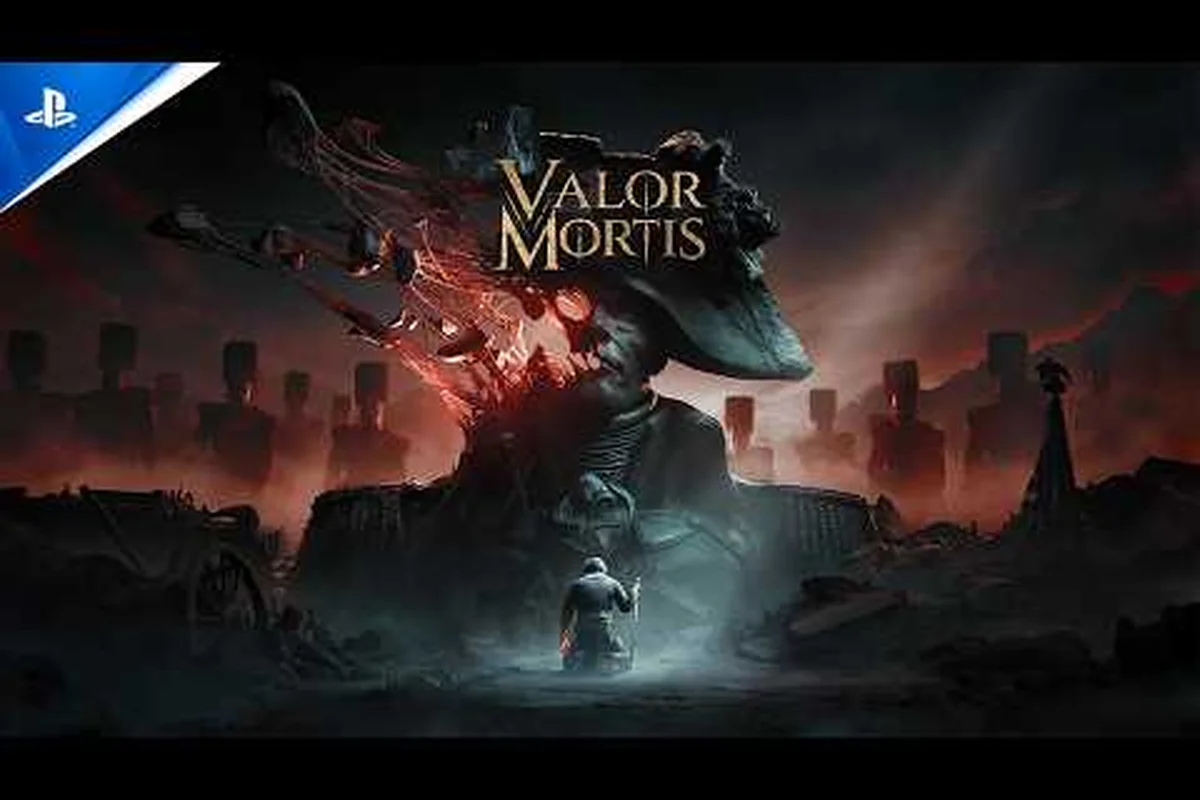
The Valor Mortis Eastern Europe setting is more than a backdrop — it is the engine driving every corpse that rises, every order Napoleon whispers, and every secret William unearths as he stumbles through fog-shrouded villages and abandoned monasteries. The region itself feels cursed: frostbitten roads, Slavic-crossroad chapels, and overgrown Austro-Hungarian ruins all frame a story about a pandemic that was never natural, a resurrection that should never have happened, and a cover-up that reaches the highest ranks of the post-Napoleonic order. Understanding this setting unlocks the why behind the Crimson Plague, the who behind William, and the how behind an alternate-history conspiracy that reframes one of Europe's most famous military campaigns as the cover story for something far more disturbing.
The Geography of the Crimson Plague: Mapping the Setting
A Frontier Carved Between Three Empires
The playable region sits inside a Carpathian-adjacent wedge of land that historically shifted between the Habsburg, Ottoman, and Russian spheres of influence. The developers chose this specific location because it carries a real-world reputation for plague folklore, vampire myths, and borderland superstition — all of which feed directly into the game's gothic-horror tone. The setting is not a single country but a contested marchland, and that ambiguity matters: it gives the writers room to layer three different imperial mythologies on top of one another.
| Region | Real-World Counterpart | Fictional Role in the Plague |
|---|---|---|
| Habsburg Foothills | Galicia / Transylvania foothills | Initial outbreak zone, village quarantine |
| River Marchlands | Danubian wetlands | Plague-carrier trade route |
| Northern Pine Barrens | Polish-Belarusian borderland | Quarantine wall, hidden monastery |
| Coastal Black Sea Outpost | Odessa region | Evacuation port, Napoleonic garrison |
| Capital of the Concordat | Fictional, Budapest-inspired | Where the cover-up is administered |
Climate, Atmosphere, and Visual Storytelling
The setting is rendered in perpetual late autumn: iron-grey skies, rain-slicked cobblestones, and a wind that carries church-bell tolls across every valley. The art team reportedly chose this season because decaying leaves visually echo the necrotic tissue of plague victims, reinforcing the theme that the land itself is rotting. Players who have walked through the first three chapters report that the fog density increases as William approaches the origin village, which functions as a subtle mechanic-as-narrative: the closer he gets to the source, the harder it becomes to see the truth.
Why This Geography Was Chosen
Eastern Europe offered the writers three things no other region could: a documented history of cholera and typhus outbreaks in the early 19th century (so the plague feels grounded), a rich vampire and revenant folklore tradition (so the supernatural elements feel inherited rather than imported), and a political vacuum after 1815 (so Napoleon's shadow still has weight even in defeat). The result is a setting where biology, mythology, and imperial collapse collide — and where the Valor Mortis plague origins can plausibly be traced to a single compromised river town.
Valor Mortis Plague Origins: How the Outbreak Began
The Patient Zero Trail
According to community data collected from in-game letters, autopsy notes, and environmental clues, the outbreak did not begin as a natural disease. The earliest documented case — referred to in apothecary logs as Patient Zero of Vorodyn — was a Habsburg field surgeon who handled corpses during the retreat from Leipzig in 1813. He carried a pathogen back to his home village in the Carpathian foothills, where it mutated inside the local population and produced symptoms that no 19th-century physician could classify.
| Stage | Timeline (In-Game) | Symptoms | Narrative Function |
|---|---|---|---|
| Stage 1: Rash Fever | Days 1–4 | High fever, black rash, delirium | Misdiagnosed as typhus |
| Stage 2: Still Pulse | Days 5–8 | Heartbeat undetectable, but patient moves | Establishes "undead" ambiguity |
| Stage 3: Crimson Veins | Days 9–14 | Visible blood vessels burst through skin | Names the plague |
| Stage 4: Revenant | Day 15+ | Full reanimation, hostile to living | Triggers military quarantine |
The Biological Conspiracy
The plague is not a bacterium or a virus in the classical sense. Player-recovered documents describe it as a parasitic filament that integrates with the host's nervous system, essentially rewriting the autonomic signals that define death. This is why standard quarantines fail and why traditional weapons only slow the afflicted rather than stop them. The fact that the pathogen integrates with the host makes the Valor Mortis conspiracy explained through the question of who had access to such a bioweapon in 1813 — and the trail points consistently toward the retreating French army's medical corps.
Why the Outbreak Was Covered Up
Three factions had motives to suppress the truth. The Habsburg authorities wanted to avoid admitting that their supply lines had been contaminated by French biological sabotage. The Russian Empire wanted the destabilized region to remain weak enough to absorb later. And the remnant French officers loyal to Napoleon's mythic image needed the retreat from Leipzig to remain a noble defeat rather than the origin point of a continental plague. The cover-up is therefore not a single conspiracy but a convergence of three silences, each protecting a different political lie.
Valor Mortis Who Is William: The Protagonist Before Resurrection
A Career Officer, Not a Folk Hero
William is introduced not as a chosen one but as a mid-ranking French artillery captain who served under Napoleon from the Italian campaigns through the disastrous Russian winter. Players who piece together his service record from in-game medals, correspondence, and uniform insignia can trace a career that is competent but unremarkable — a professional soldier who did his job and tried to survive. This grounding matters because it makes his resurrection feel like a violation rather than a destiny: William is not special, which is exactly why his transformation terrifies.
| Attribute | Pre-Death William | Post-Resurrection William |
|---|---|---|
| Rank | Captain, 17th Artillery | None — officially erased from records |
| Allegiance | French Empire, Napoleonic cause | None — hunted by all factions |
| Physical State | Killed at Leipzig, buried in mass grave | Reanimated, partially decayed, intermittently lucid |
| Knowledge | Standard officer's education | Fragments of old memories + plague-infected visions |
| Moral Compass | Loyal to the Empire, ambivalent toward civilians | Conflicted, increasingly anti-authority |
The Man Behind the Uniform
Letters found in his pre-death quarters reveal a man who was tired, skeptical of the Emperor's later campaigns, and privately horrified by the cost of the Russian invasion. He kept a journal in which he questioned whether Napoleon's ambition had become indistinguishable from tyranny. These details are critical because they explain why William, once resurrected, does not simply rejoin any faction. His moral scaffolding was already cracked before he died, and the plague widens those cracks into the open conflict that drives the campaign.
Why His Identity Was Erased
For a deeper read on how William's erased identity interacts with Napoleon's postwar maneuvers, the Valor Mortis Napoleon Bonaparte profile maps the alternate-history timeline that produced the cover-up. The short version is that William knew too much about the retreat from Leipzig, including which officers authorized the use of experimental medical compounds on prisoners. Erasing him from the rolls was easier than silencing a living witness.
What Happened to William: Death, Erasure, and Rebirth
The Night at Leipzig
William's death occurs off-screen but is reconstructed through field reports, chaplain testimonies, and a single intact page from his journal that players can recover in the game's second chapter. He was killed not by cannon fire but by a bayonet wound to the abdomen during a rear-guard action, then dumped into a mass grave with several hundred other French casualties. The grave site is real and is the location where his resurrection begins approximately one year later.
| Event | Date (In-Game Calendar) | Source of Confirmation |
|---|---|---|
| Wounding at Leipzig | October 1813 | Journal fragment, uniform damage |
| Burial in mass grave | October 1813 | Chaplain's ledger, grave marker |
| Body discovered by graverobbers | August 1814 | Thief's confession letter |
| Body sold to Concordat apothecaries | September 1814 | Trade manifest |
| Resurrection triggered | March 1815 | Environmental diary, ambient audio |
| First conscious act | March 1815, midnight | Opening cutscene |
The Mechanics of His Return
William's resurrection is not divine and not accidental. It is the result of a deliberate necromantic-medical ritual performed by a faction the game calls the Order of the Crimson Vein — a secret society of apothecaries, ex-military surgeons, and folk healers who believed the plague pathogen could be weaponized. They needed a test subject with enough military training to survive the reanimation shock, enough political obscurity to disappear, and enough physical resilience to carry the pathogen without immediate decomposition. William fit every criterion.
Why He Cannot Stay Dead
The plague pathogen that killed him is the same one that resurrects him. Because the filament integrates with the host's nervous system rather than destroying it, William exists in a permanent state of partial death: his heart does not reliably beat, his body temperature is well below living norms, and his cells continue the slow necrotic process even as they move. This is why gameplay mechanics tie his health regeneration to environmental horror — the more plague-touched the area, the more his body "remembers" how to function. It is also why dying in the game does not end the playthrough; William simply reconstitutes from the nearest plague-soil, which is the in-fiction explanation for the respawn loop.
The Conspiracy Behind the Resurrection
Three Factions, One Body
The Valor Mortis conspiracy explained through its player-facing evidence points to a three-way collision of interests around William's corpse. The Order of the Crimson Vein wanted him as a proof-of-concept for a resurrective army. The Concordat authorities wanted to study the pathogen to develop a countermeasure they could monopolize. And Napoleon's inner circle, operating from exile, wanted William revived specifically because he had been present at the moment the experimental pathogen was first deployed on Russian prisoners — a witness who could be interrogated, controlled, or eliminated.
| Faction | Goal for William | Method |
|---|---|---|
| Order of the Crimson Vein | Field-test resurrection ritual | Performed the ritual, observed outcome |
| Concordat Authorities | Capture and dissect the resurrected subject | Sent agents to intercept the Order |
| Napoleonic Loyalists | Extract Leipzig testimony, then silence | Planted a handler inside the Order |
| Russian Imperial Intelligence | Weaponize the resurrection as propaganda | Sabotaged all three plans simultaneously |
The Handler in the Order
The conspiracy thickens because every faction believed it controlled the ritual site. In reality, a Napoleonic loyalist disguised as a Crimson Vein apothecary was the one who actually completed the resurrection incantation. This explains why William, upon waking, has fragmented flashbacks not to the Order's ritual chamber but to a French military tent on the eve of Leipzig — Napoleon himself, according to recovered dialogue logs, whispered the trigger phrase that completed the resurrection remotely. This is the answer to the question players ask most often: why did Napoleon resurrect William. The Emperor needed a witness he could later deny, a body that could move through enemy territory unseen, and a soul already half-broken enough to be manipulated.
What the Conspiracy Hides
The deeper secret — and the one that drives the endgame — is that the plague was not a French bioweapon at all. It was a pre-existing pathogen endemic to the Carpathian foothills, which the French military merely activated by disturbing burial sites during the 1812 retreat. The conspiracy therefore is not "Napoleon invented the plague" but "Napoleon knew the plague existed and used it anyway." For the broader narrative context, the Valor Mortis story explained breakdown tracks how this revelation reframes the entire campaign from a horror story into a political tragedy.
Why Did Napoleon Resurrect William Specifically
The Strategic Logic
Napoleon, even in exile, was a man who thought in terms of operational assets. William was chosen for three reasons that appear in recovered correspondence between the Emperor and his loyalist handler. First, William was the only surviving officer who had personally witnessed the deployment of the experimental pathogen on Russian prisoners at a field hospital near Smolensk in 1812. Second, William's mid-ranking status meant he was forgettable enough to disappear without triggering inquiries from his own family. Third, and most importantly, William had a psychological profile — documented in his own journal — that suggested he would question authority rather than serve it blindly, which made him ideal for a mission that required independent judgment once activated.
The Unspoken Betrayal
What Napoleon did not anticipate was that resurrecting William would also resurrect his moral doubts. The plague filament preserves not just motor function but emotional memory, and William's reanimated guilt over his role in the Russian campaign became the single most powerful force working against the Emperor's plan. By bringing William back, Napoleon accidentally created the one agent who could not be fully controlled — a resurrected officer whose conscience was louder than his loyalty. This is why the late-game revelations do not simply expose the conspiracy; they turn William into the weapon that dismantles it.
The Final Irony
The deepest layer of the conspiracy is that Napoleon's own handler, the one who performed the ritual, was the same man who had ordered the original deployment of the pathogen at Smolensk. He was not merely reviving a witness; he was attempting to rewrite his own guilt through William's body. When William eventually confronts this handler in the endgame chapel, the dialogue is not about revenge but about the impossibility of using the dead as vessels for the living's sins. This thematic knot — that resurrection is a form of theft — is the moral spine of the entire Eastern Europe campaign.
The Cultural and Religious Layer of the Setting
Folk Religion and the Plague Cult
The Valor Mortis Eastern Europe setting also encompasses a folk-religious response to the outbreak that the developers call the Plague Religion. Peasants in the quarantined villages began worshipping the pathogen itself, treating afflicted family members as living saints whose slow deaths were considered acts of communion. This belief system is grounded in real Eastern European folk-Christianity, where death and resurrection are liturgically linked, and it gives the game a texture that pure military horror cannot achieve. The full breakdown of the sect hierarchy and its prophet-figure is mapped in the Valor Mortis plague religion guide, which traces the theology from village shrine to Concordat council.
Folk Practices and In-Game Mechanics
Players encounter the Plague Religion through environmental storytelling rather than dialogue trees. Carved wooden icons, candle arrangements, and the specific posture of corpses in prayer all signal which villages have fully converted. These details feed into gameplay: converted villages will not attack William on sight, while non-converted villages will burn plague victims alive, which has consequences for how many NPCs survive a given chapter. The setting therefore is not just lore; it is a moral ledger the player is constantly writing without realizing it.
The Role of Iconography
The developers drew on Byzantine and Eastern Orthodox visual language for the Plague Religion's iconography, but warped it: saints are depicted with exposed ribcages, halos are rendered as wound-rings, and crosses are inverted to suggest the faith has been corrupted. This visual choice reinforces the central tension of the setting — a region that was Christian for a thousand years now worshipping a disease because the old God did not answer the瘟疫. It is one of the most thematically dense parts of the campaign and a major reason the Eastern Europe setting feels less like a backdrop and more like a character.
Frequently Asked Questions
Is the Valor Mortis Eastern Europe setting based on a real country?
The setting is a fictional wedge of land inspired by the Carpathian foothills, Galicia, and the Danubian wetlands — a frontier that historically sat between the Habsburg, Ottoman, and Russian empires. It is not a direct map of any modern country, which lets the writers blend folklore and political history from all three regions without committing to one.
Who is William before he becomes the protagonist?
William was a mid-ranking French artillery captain who served under Napoleon from the Italian campaigns through the retreat from Moscow. He was a competent but unremarkable officer whose journal entries reveal a man already growing skeptical of the Emperor's later wars — a moral fatigue that becomes central to the resurrected version of him.
What actually caused the Valor Mortis plague origins?
The plague was not engineered from scratch. According to in-game documents, it was a pre-existing pathogen endemic to the Carpathian foothills that was activated when the French army disturbed burial sites during the 1812 retreat. The French military then deployed it deliberately at a field hospital near Smolensk, which is the event that ultimately triggers the continental outbreak.
Why did Napoleon resurrect William specifically?
Napoleon resurrected William because he was the only surviving officer who had personally witnessed the deployment of the experimental pathogen at Smolensk. The Emperor needed a witness he could later interrogate or eliminate, a body forgettable enough to disappear, and a mind independent enough to operate behind enemy lines. The plan backfired because resurrection also restored William's moral doubts.
Does the Valor Mortis conspiracy explained by the game have a single villain?
No. The conspiracy is a three-way collision between the Order of the Crimson Vein, the Concordat authorities, and Napoleon's loyalist remnants, each of which believed it controlled the ritual. The deeper irony is that none of them invented the plague; they merely inherited a pathogen that was older than all their political ambitions.