
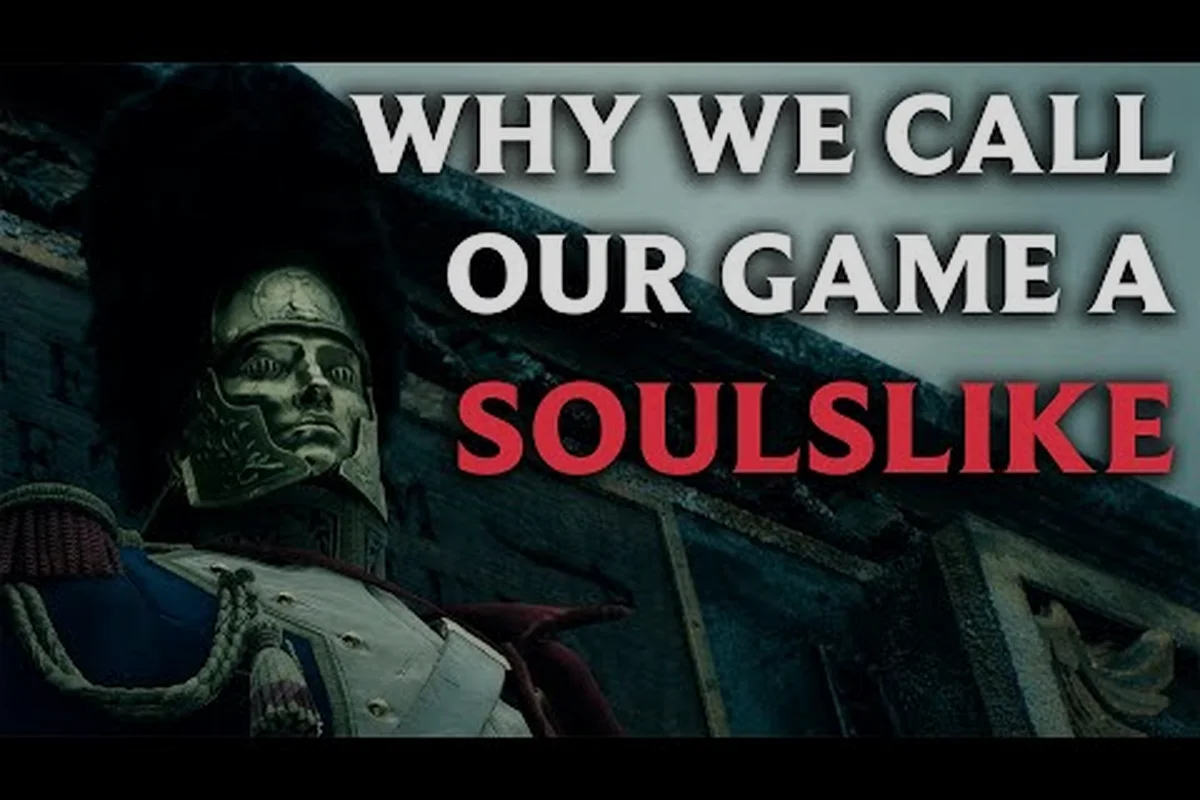
The Valor Mortis meaning of title is not a decorative flourish. It is a thesis statement that the entire campaign, from the opening battlefield resurrection to the final confrontation inside Napoleon's inner circle, is built to prove. Understanding that phrase changes how you read every note, every boss arena, and every ambiguous ending.
What the Title Actually Means
The phrase "Valor Mortis" is a deliberate Latin construction that does not translate cleanly into English. "Valor" carries the expected meaning of courage, worth, or martial excellence. "Mortis" is the genitive form of "mors," meaning death. The most literal reading is "the worth of death" or "the courage of death," but the game's narrative pushes toward a darker, more active interpretation: the value that death itself produces.
William, the resurrected Grande Armee soldier, is the living proof of that thesis. His entire existence is a transaction between military courage and death's currency. The game opens with him clawing out of a battlefield grave, which immediately reframes the title as a mechanic rather than a mood. Death is not an ending in this world; it is a resource, a catalyst, and a debt that must be repaid.
This reading is reinforced by the game's core loop. Every time William dies, the world state shifts slightly. Enemies remember. The Crimson Plague spreads. The supernatural architecture of the alternate 19th-century Europe becomes more visible. According to the official site for Valor Mortis, the developers describe the setting as a world where "horror, supernatural forces, and war are present at every step," which suggests that the title is meant to be read as a warning about what courage costs when death is not permanent.
| Latin Element | Literal Meaning | Narrative Implication |
|---|---|---|
| Valor | Courage, worth, martial excellence | William's soldier identity and combat skill |
| Mortis | Of death (genitive) | The debt, the resurrection, the Crimson Plague |
| Valor Mortis | The worth/courage of death | Death as currency, not an endpoint |
| Combined reading | The price courage pays to death | The conspiracy's true cost |
The title also functions as a mirror for Napoleon's regime. Napoleon, voiced by Vincent Cassel, has built an empire that literally monetizes death through the Eternal Guard and the Crimson Plague. His version of "valor" is the willingness to sacrifice soldiers, civilians, and eventually reality itself to maintain power. William's version is the refusal to stay dead. The title sits between those two definitions, and the endings ask you to choose which one survives.
The Story So Far: A Complete Recap
The narrative spine of Valor Mortis is a conspiracy thriller wrapped in a Soulslike shell. William begins as a nameless soldier in Napoleon's Grande Armee, killed in a battle that the game deliberately keeps vague for the first several hours. His resurrection is not divine intervention. It is the result of a process tied directly to the Crimson Plague, a supernatural disease that transforms the dead into something that is neither fully alive nor fully dead.
The conspiracy reaches into Napoleon's Eternal Guard, an elite unit that functions as both bodyguard and secret police. As William moves through Metroidvania-inspired levels, he uncovers documents and environmental storytelling that reveal the Eternal Guard's true purpose: they are not protecting Napoleon from assassins. They are managing the resurrection process, deciding who comes back and who stays in the ground.
This is where the Valor Mortis story explained guide becomes essential for players who want to track every document. The story is deliberately fragmented, with key revelations hidden in optional areas and behind boss encounters that can be missed entirely on a first playthrough.
The Crimson Plague's True Origin
The Crimson Plague is not a natural disease. It is a manufactured supernatural event, created as a byproduct of Napoleon's attempt to weaponize resurrection. The plague spreads through blood and battlefield soil, which explains why William's grave becomes a vector. Every time he dies and returns, he spreads the infection further, making him both victim and carrier.
This creates a moral tension that the game refuses to resolve until the final act. William's combat effectiveness depends on abilities that are themselves plague-derived. The supernatural powers that let him fight through horrifying monsters are the same forces that are destroying the world. The title's "valor" becomes increasingly ironic as the player realizes that William's courage is feeding the very catastrophe he is trying to stop.
Napoleon's Eternal Guard
The Eternal Guard represents the institutionalization of death-as-resource. Their members are resurrected soldiers who have been conditioned to see death as a promotion, not a punishment. The game's environmental storytelling suggests that the Guard has been operating for decades, refining the resurrection process through trial and error on battlefields across Europe.
William's relationship to the Guard is complicated. He was meant to become one of them, but something went wrong with his resurrection. He retained his memories, his conscience, and his ability to question orders. That makes him a defect in Napoleon's system, which is why the Guard hunts him throughout the campaign.
True Ending and Secret Ending Breakdown
The Valor Mortis true ending is locked behind a series of requirements that most players will miss on a blind playthrough. The game does not signpost these requirements, which has led to significant community discussion about what is actually required versus what is rumor.
-
Collect all Crimson Plague scrolls and documents scattered across the Metroidvania-inspired levels
-
Defeat the Eternal Guard Captain without using any plague-derived abilities
-
Interact with every battlefield grave marker before entering the final area
-
Complete the Napoleon memory sequence in the correct chronological order
-
Refuse the resurrection ritual when offered during the final confrontation
The true ending resolves the title's thesis in a way that the standard ending does not. William finally understands that "valor mortis" is not a command to be brave in death, but a warning about what happens when courage becomes a commodity. The ending shows him breaking the cycle, though the exact nature of that break depends on choices made throughout the game.
The Valor Mortis secret ending is even more obscure. It requires a second playthrough on New Game+ with specific conditions met during the first run. The secret ending reframes the entire story as a loop that William has been trapped in for far longer than the game initially suggests. It directly connects to the title's Latin construction, suggesting that "mortis" is not just death but a specific death that has already happened multiple times.
| Ending Type | Requirements | Title Connection | Community Consensus |
|---|---|---|---|
| Standard | Complete main story | Surface reading: courage in death | Most common first completion |
| True | Full note collection + specific boss conditions | Death as debt that must be refused | Requires guide or extensive exploration |
| Secret | New Game+ with hidden conditions | Death as loop, valor as repetition | Extremely rare, heavily discussed |
The Valor Mortis ending guide provides a detailed walkthrough for all three endings, including the specific boss conditions that are easy to miss. The guide is particularly useful for the true ending, where the Eternal Guard Captain fight has a hidden phase that only triggers if you have not used plague abilities.
How the Lore Reframes Gameplay
The Valor Mortis lore guide is not a separate document from the gameplay. The two are fused in ways that reward players who pay attention to environmental storytelling. Every boss arena, every weapon description, and every enemy placement is a piece of the narrative puzzle.
The Crimson Plague mechanic is the clearest example. In most Soulslikes, death is a punishment that resets progress. In Valor Mortis, death is a narrative event that advances the plague's spread. The game tracks how many times you die and subtly changes the world in response. Players who die frequently will see more plague-infected enemies, more corrupted environments, and more aggressive Eternal Guard patrols.
This creates a meta-commentary on the Soulslike genre itself. The genre's core loop of die-and-retry is literalized as a supernatural catastrophe. Your persistence, your "valor," is actively making the world worse. The title is not just about William; it is about the player's relationship to death as a mechanic.
The Metroidvania Structure as Narrative Device
The Metroidvania-inspired level design is not just a gameplay choice. It is a narrative device that mirrors William's fragmented memory. Areas that are inaccessible early in the game represent memories and knowledge that William has lost or suppressed. As you unlock new abilities and return to old areas, you are literally reconstructing his understanding of what happened to him.
This is why the Valor Mortis lore locations guide is so valuable for players who want the full story. The lore objects are not optional flavor text. They are the primary mechanism through which the game delivers its narrative, and many of them are hidden behind ability gates that require backtracking.
The Horror Elements as Thematic Reinforcement
The horror elements in Valor Mortis are not jump scares. They are slow, creeping dread that reinforces the title's meaning. The supernatural forces that William fights are not external invaders. They are the consequences of human choices, specifically Napoleon's choice to weaponize death.
The game's alternate 19th-century Europe is a world where the Napoleonic Wars never ended, because death itself has been compromised. Soldiers cannot stay dead. Civilians cannot escape the plague. The horror comes from the realization that the world's suffering is not an accident but a deliberate strategy.
Community Theories and Unresolved Questions
The Valor Mortis story so far has generated significant community discussion, particularly around the ambiguous elements that the game deliberately leaves unresolved. The most prominent theories focus on the nature of William's resurrection and the true identity of the force that brought him back.
One major theory, widely discussed in the community, suggests that William is not a random soldier but a specific individual whose death was engineered to create a particular type of resurrected being. The theory points to the unusual clarity of his memories and his resistance to the Eternal Guard's conditioning as evidence that his resurrection was different by design.
Another theory focuses on the Crimson Plague's relationship to Napoleon himself. The game strongly implies that Napoleon is not merely using the plague but is in some way connected to its origin. The exact nature of that connection is left ambiguous, which has led to competing interpretations about whether Napoleon is a victim, a perpetrator, or something else entirely.
| Theory | Core Claim | Supporting Evidence | Status |
|---|---|---|---|
| Engineered Resurrection | William was specifically chosen and prepared | Memory clarity, Guard resistance | Widely accepted |
| Napoleon as Plague Source | Napoleon is the origin point of the Crimson Plague | Environmental clues, memory sequences | Debated |
| The Loop Theory | The entire game is a repeating cycle | Secret ending, New Game+ differences | Confirmed by secret ending |
| The Third Force | Something beyond Napoleon is manipulating events | Unexplained supernatural phenomena | Speculative |
The Valor Mortis side quest guide is worth consulting for players who want to explore the optional content that contains many of these lore revelations. The side quests are not marked on the map, and several of them contain critical story information that is easy to miss.
Frequently Asked Questions
What does Valor Mortis actually mean?
The phrase combines the Latin "valor" (courage, worth) with "mortis" (of death), creating a meaning that shifts throughout the game. It starts as "courage in death" but deepens into "the price courage pays to death" as William uncovers the resurrection conspiracy behind Napoleon's Eternal Guard.
How do I unlock the true ending?
You need to collect all Crimson Plague scrolls and documents, defeat the Eternal Guard Captain without plague abilities, interact with every battlefield grave marker, complete Napoleon's memory sequence chronologically, and refuse the resurrection ritual during the final confrontation. The requirements are not signposted in-game.
Is the secret ending worth the effort?
Yes, because it fundamentally reframes the entire story as a repeating loop. The secret ending confirms that William has been through this cycle multiple times, which recontextualizes the title's "mortis" as a specific recurring death rather than death in general.
Does the Crimson Plague change based on how often I die?
Yes, the game tracks player deaths and subtly alters the world in response. Frequent deaths lead to more plague-infected enemies, more corrupted environments, and more aggressive Eternal Guard patrols, making the game's difficulty a narrative mechanic rather than a static setting.
Is Napoleon the main villain?
The game keeps this ambiguous. Napoleon is voiced by Vincent Cassel and is clearly complicit in the resurrection conspiracy, but the story suggests that he may not be the ultimate source of the Crimson Plague. The secret ending implies that something beyond Napoleon is manipulating the entire cycle.